Stuck in a lift? Here's exactly what to do (and what never to do), why a stopped elevator is safer than it feels, how rescue actually works in India, and the features that prevent entrapment in the first place.
The short answer
If an elevator suddenly stops: stay calm, press the alarm button, use the cabin intercom or your phone to call for help (building security, the lift company's 24×7 number, or 112), and wait inside. Never force the doors or attempt to climb out — a stalled cabin is one of the safest places you can be, and nearly all entrapment injuries happen during self-rescue attempts, not from the stoppage itself. Trained technicians typically release passengers within 30–60 minutes in Indian metros.
Step 1: steady yourself — the cabin cannot fall
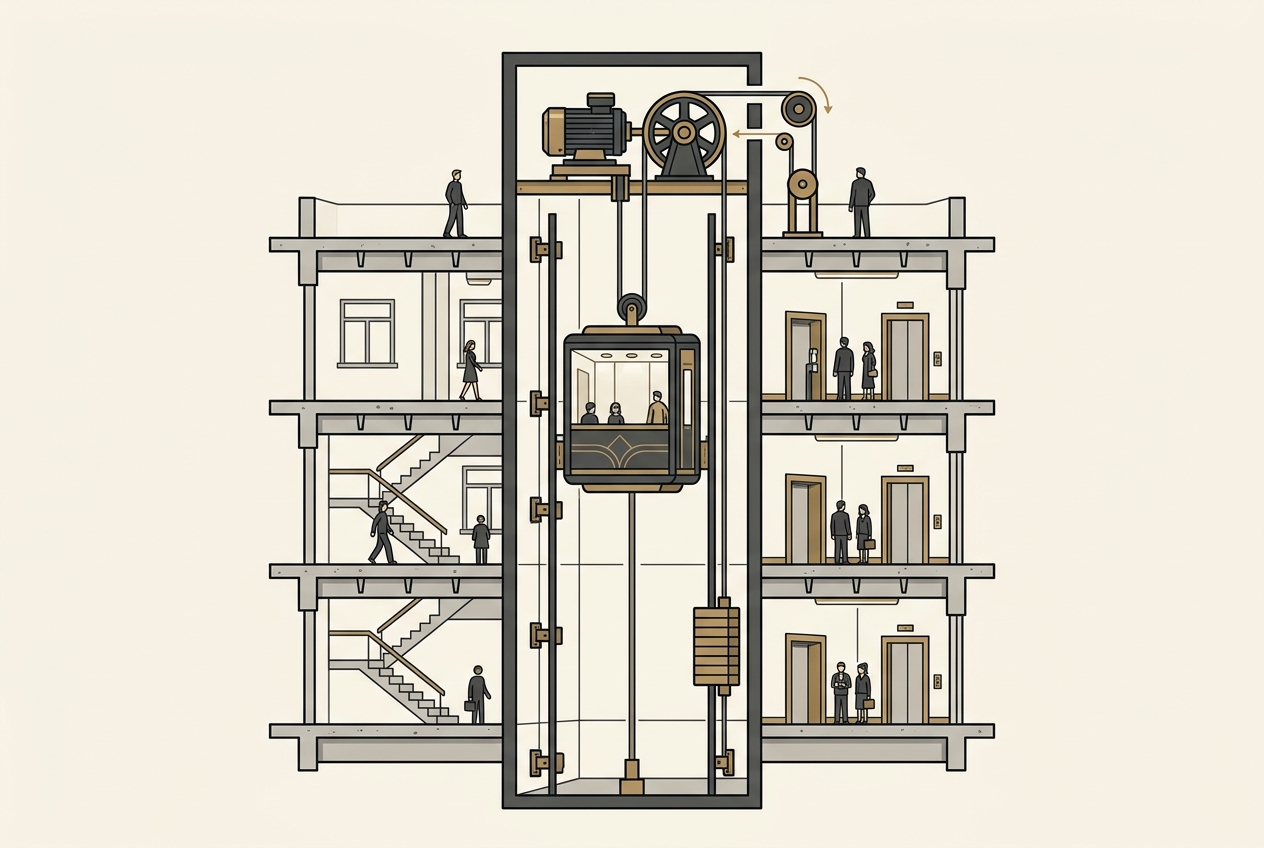
The fear of a falling elevator is cinematic, not mechanical. Traction lifts hang on 4–8 steel ropes, each independently capable of holding the full load, backed by an overspeed governor and safety gear that clamp the cabin to its rails. Hydraulic lifts rest on a piston that physically cannot free-fall. A lift that stops has almost always done so because a safety system worked — a power cut, a door-circuit interruption, or a sensor doing its job. Take a slow breath; the situation is inconvenient, not dangerous.
Step 2: alert someone — three ways
First, press and hold the alarm button — it rings in the building and, on modern lifts, alerts the monitoring service. Second, use the cabin intercom/emergency phone if fitted (mandatory on IS 14665-aligned lifts). Third, use your mobile: call building security, the lift company's service number posted inside the cabin, or 112 if you cannot reach anyone. If you're in a Vila elevator, our 24×7 line is +91 90712 21100 — and our IoT-monitored lifts have usually already sent an automatic entrapment alert to our service centre before you dial.
Step 3: wait inside — the only safe choice
Do not pry the doors open, and never climb through a partially open door or ceiling hatch. If the lift restarts while someone is halfway out, the consequences are severe — this is how virtually every serious elevator injury happens. Cabins are not airtight; you will not run out of air. Sit down if you feel anxious, keep phone usage light to preserve battery, and if the lights go out, remember battery-backed emergency lighting keeps the cabin from going fully dark.
How rescue actually works
A trained technician (or fire service) will first cut power to prevent movement, then either manually wind the lift to the nearest landing or use the brake-release procedure to level the cabin and open the doors from outside. This is a 10-minute operation for a professional — and precisely why untrained 'helpers' should never attempt it. Buildings with an AMC get committed response times; Vila's written SLA is 4 hours anywhere in Bangalore metro, with entrapments treated as top-priority callouts, typically reached far faster.
The features that prevent entrapment in the first place
Automatic Rescue Device (ARD): during a power cut, it drives the cabin to the nearest floor on battery and opens the doors — standard on every Vila elevator, and the single most important anti-entrapment feature for Indian power conditions. Hydraulic battery lowering does the same via gravity descent. IoT monitoring catches the failing door operators and voltage issues that cause most stoppages before they strand anyone. And disciplined monthly maintenance under an AMC (from ₹22,000/year residential) keeps all of it working. If your building's lift lacks an ARD, modernization can add one — call +91 90712 21100 for an assessment.
Get a personalized quote for your building.
Our engineering team will review your requirements and respond within one business day.
Request A Quote