How hydraulic and traction elevators actually work, illustrated — plus an honest comparison of cost, speed, energy use, noise, maintenance and which one suits homes, apartments and commercial buildings in India.
The short answer
Hydraulic elevators push the cabin up with an oil-driven piston — quiet, compact at ground level, ideal for 2–4 floors and retrofits, with battery lowering during power cuts. Traction elevators pull the cabin with steel ropes over a motor-driven sheave, balanced by a counterweight — 30–40% more energy-efficient, faster, and the right choice for 5+ floors or heavy daily use. Vila manufactures both at its Bommasandra facility in Bengaluru and recommends the technology only after a free site survey.
How a hydraulic elevator works
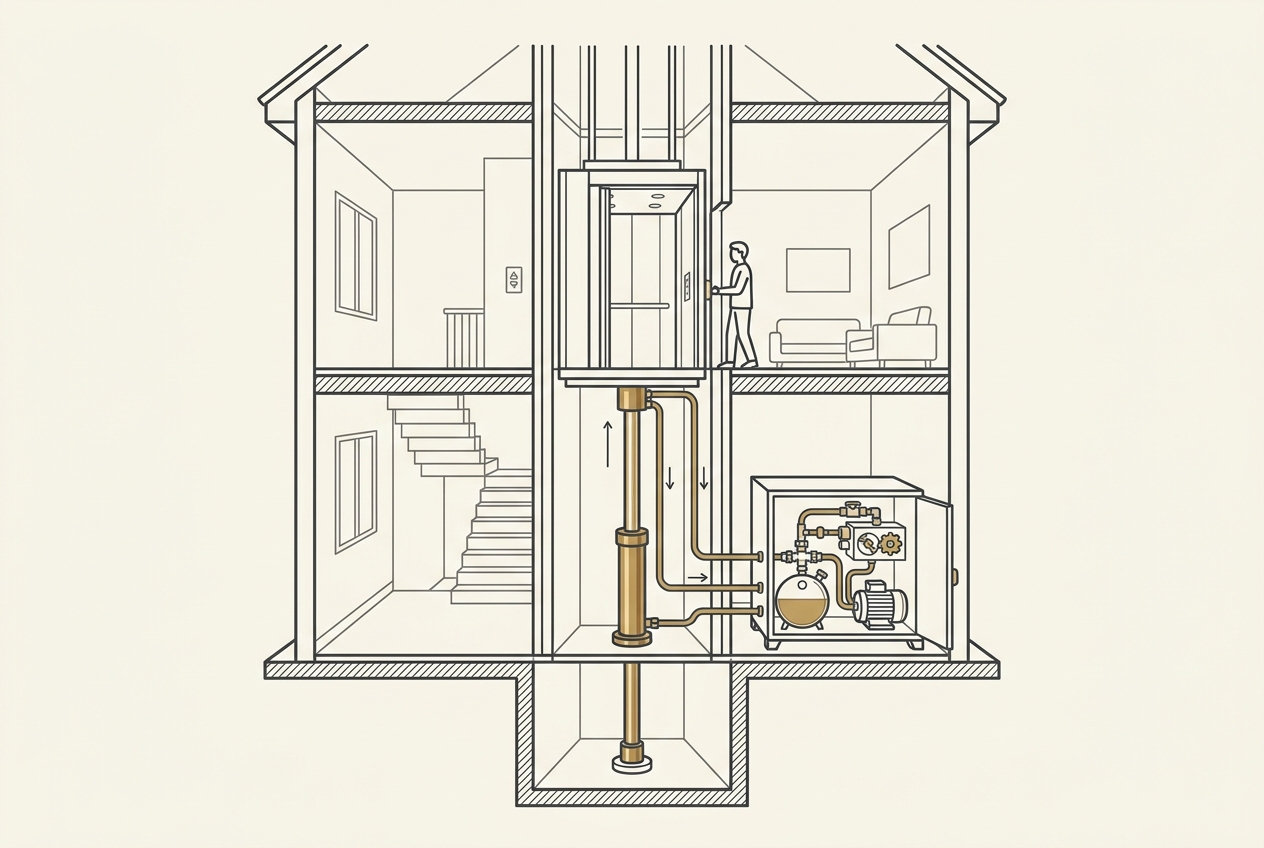
A hydraulic elevator is lifted from below. An electric pump pushes oil into a cylinder, extending a piston (ram) that raises the cabin; to descend, valves release oil back to the reservoir and the cabin glides down by gravity — using almost no power. The machinery lives in a small cabinet at ground level, so there is no machine room on the roof and headroom requirements are minimal. Descent-by-gravity also enables the standout safety feature: battery-powered emergency lowering that brings passengers gently to the ground floor during a power cut.
How a traction elevator works
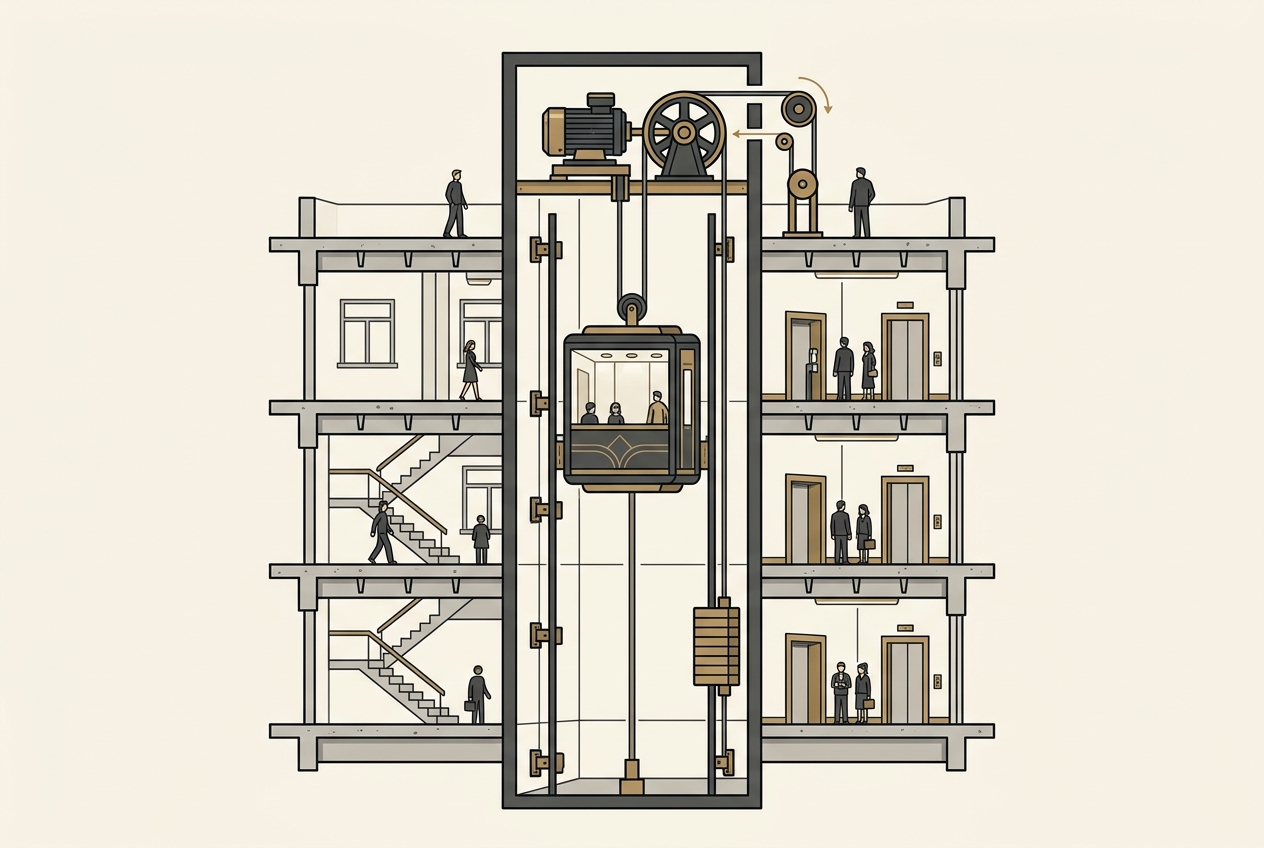
A traction elevator is pulled from above. Steel ropes run over a grooved sheave turned by an electric motor — in modern Machine-Room-Less (MRL) designs, the motor mounts inside the shaft at the top. A counterweight (roughly the cabin's weight plus half its rated load) moves opposite the cabin, so the motor only lifts the difference — the physics behind traction's superior energy efficiency. Gearless permanent-magnet motors make current MRL lifts smooth, fast and quiet, and regenerative drives can feed braking energy back to the building.
Head-to-head: the eight differences that matter
Floors: hydraulic suits G+1 to G+3; traction handles G+1 to G+15 and beyond. Speed: hydraulic 0.15–0.3 m/s; traction 0.5–1.75 m/s. Energy: traction wins by 30–40% in regular use; hydraulic barely sips power going down. Noise: modern hydraulics are the quietest at low rise; MRL traction is quiet but the top-of-shaft motor is nearer bedrooms in a villa. Space: hydraulic needs a ground cabinet but minimal pit and headroom; traction MRL needs no cabinet but slightly more overhead. Power cuts: hydraulic battery-lowering is simplest; traction uses an ARD that also works reliably. Maintenance: hydraulic adds periodic oil checks; traction adds rope inspections — annual costs are similar (residential AMCs start at ₹22,000/year). Lifespan: both reach 25+ years with proper maintenance.
Cost comparison in India (2026)
For a 2–3 floor home lift, hydraulic and MRL traction are now priced similarly: ₹6.5–8 lakhs installed for standard finishes from Vila, with premium cabins reaching ₹10–12 lakhs on either technology. Traction pulls ahead on lifetime economics in busy buildings — an apartment lift making 200+ trips a day saves meaningfully on electricity. For a lightly used villa lift, the energy difference is small (₹300–600/month either way), so ride feel, space and power-cut behavior should decide.
Which one should you choose?
Choose hydraulic if: your building is 2–4 floors, you are retrofitting an existing home, headroom is tight, silence is a priority, or usage is light. Choose traction (MRL) if: the building is 5+ floors, the lift will run frequently all day, energy efficiency matters, or you need higher speeds. The honest answer is that the right technology falls out of the site conditions — which is why Vila, manufacturing both types in Bengaluru, decides only after a free site survey. Call +91 90712 21100 and we will measure, recommend and quote within one business day.
Get a personalized quote for your building.
Our engineering team will review your requirements and respond within one business day.
Request A Quote